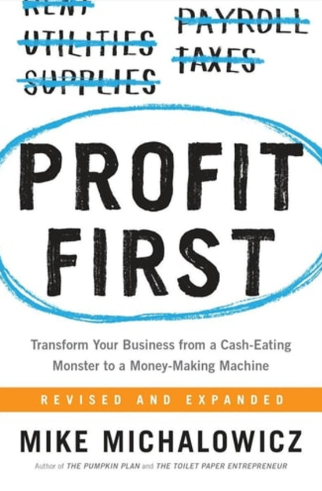
Profit First
by Mike Michalowicz
Key Takeaways
Book Snapshot
Core Theme: A behavioral cash management system that flips the traditional accounting formula to ensure a business is profitable from every deposit.
Who it’s for: Entrepreneurs, CEOs, and freelancers who are tired of the "check-to-check" cycle and seek a simple, sustainable way to manage their company's financial health.
The Big Idea
Traditional accounting follows the formula Sales – Expenses = Profit, which treats profit as a leftover or an afterthought. Because humans are naturally inclined to consume all available resources, business owners often spend whatever is in their bank account, regardless of the actual health of the company. By flipping the formula to Sales – Profit = Expenses, owners are forced to set aside profit first and operate the business using only the remaining funds.
This system creates a "small plate" effect, where limited operating capital drives efficiency and innovation within the organization. It transitions a business from a "cash-eating monster" into a "money-making machine" by working with human nature rather than against it. Ultimately, this ensures the business serves the owner’s life rather than the owner being a slave to the business.
Key Concepts
Bank Balance Accounting
• What it means: The common habit of business owners checking their daily bank balance to make immediate spending decisions based on available cash.
• Why it matters: It triggers the "Recency Effect," causing owners to overspend when balances are high and panic when they are low, rather than following a long-term plan.
• Practical implication: Owners should use multiple bank accounts to provide instant, visual clarity on what money is actually available for operations versus taxes or profit.
The Survival Trap
• What it means: The cycle of taking on any project or client to solve an immediate cash crisis, even if it doesn't align with the company's long-term vision.
• Why it matters: While it offers temporary relief, it often increases operational costs and complexity, leading to even greater financial distress later.
• Practical implication: A business must focus on "Real Revenue"—income minus materials and subcontractors—to ensure it is pursuing truly profitable work.
Small Plate Serving
• What it means: Limiting the "portion" of money available for expenses by moving profit, taxes, and owner’s pay into separate accounts immediately upon receipt.
• Why it matters: Just as smaller dinner plates help people eat less, smaller operating accounts force a business to be more creative and frugal with its spending.
• Practical implication: You must move your profit percentage out of your main account first; if there isn't enough left for expenses, you simply cannot afford those expenses.
Real Revenue
• What it means: Total revenue minus the cost of materials and subcontractors used to deliver a product or service.
• Why it matters: It represents the true amount of money available to run the business and pay its people, allowing for an accurate assessment of financial health across different industries.
• Practical implication: Owners should base all their allocation percentages (TAPs) on Real Revenue to avoid the "top-line" growth trap.
Practical Takeaways
• Segment your cash immediately by opening five core accounts: Income, Profit, Owner’s Pay, Tax, and Operating Expenses.
• Eliminate the temptation to "borrow" from yourself by setting up the Profit and Tax accounts at a completely separate bank with no online access.
• Adopt a bi-monthly financial rhythm by allocating percentages and paying bills only on the 10th and 25th of each month.
• Begin with a conservative 1% profit allocation if your business is currently struggling, focusing on building the habit before reaching for higher targets.
• Trim operational costs by 10% right away to create the necessary room for your initial profit and tax allocations.
• Reward your investment quarterly by taking a 50% distribution from the Profit account for personal celebration, leaving the other 50% as a rainy-day reserve.
• Prioritize your own compensation by ensuring the Owner's Pay account covers a market-rate salary for the work you perform.
FAQ: Common Questions
Can I just track these percentages in a spreadsheet instead of opening multiple accounts?
The system is designed to work with your natural "bank balance accounting" behavior, which spreadsheets cannot influence. By having physically separate accounts, you remove the "Recency Effect" and the temptation to justify spending money that is actually reserved for taxes or profit. Physically moving the money out of reach is what creates the necessary "small plate" scarcity to drive business efficiency.
What should I do if my Operating Expenses account doesn't have enough to pay my bills?
This is a clear signal that your business is operating inefficiently and spending more than it can afford. Rather than "stealing" from your Profit or Tax accounts, you must identify and cut unnecessary expenses or negotiate existing ones. This moment of truth is essential for transforming your "monster" into a healthy, sustainable cash cow.
Is it really okay to start with only a 1% profit allocation?
Yes, because the primary goal is to establish the habit of taking profit first without causing immediate financial shock to the business. It is better to start small and succeed than to take a 20% "leap" that you have to reverse a month later. You will gradually increase this percentage every quarter until you reach your target allocation.
What is the purpose of the 50% profit reserve left in the account?
The 50% that you do not distribute to yourself acts as a critical rainy-day fund or "The Vault". Once this reserve reaches three months of operating cash, it provides a safety net that allows the business to survive major market shifts or sales slowdowns. This ensures the business remains permanently profitable and resilient.
How do I handle my taxes under this system?
The Tax account is specifically designed so that the business—not the owner personally, fulfills all its tax responsibilities. By allocating a percentage of every deposit to this "no-temptation" account, you ensure the funds are ready when estimated payments are due. This removes the stress of year-end tax surprises and prevents you from having to borrow money to pay the government.
Subscreva o The Dispatch
Notas de operador para fundadores. Decisões, delegação e visibilidade financeira para construir um negócio que funcione sem si. Um e-mail por semana (ou menos). Cancele a qualquer momento.
Apply these insights
Reading is the first step. Implementation is the real work. Let's discuss how to apply these principles to your operations.
Sessão de Trabalho